PROJECT LIBRARY / SELECTED WORK

Applied AI and finance automation projects.

Explore the business problems, architecture decisions and delivery methods behind applied AI, agentic workflows and finance automation.

AUDIT & CONTROLS / PRODUCT DESIGN

AR Operations Intelligence

Seven-view dashboard design for event-aware workload, SLA, fair capacity comparisons, financial exposure and AI effectiveness. Implementation-ready specification; integration not verified.

Explore interactive dashboard ↗
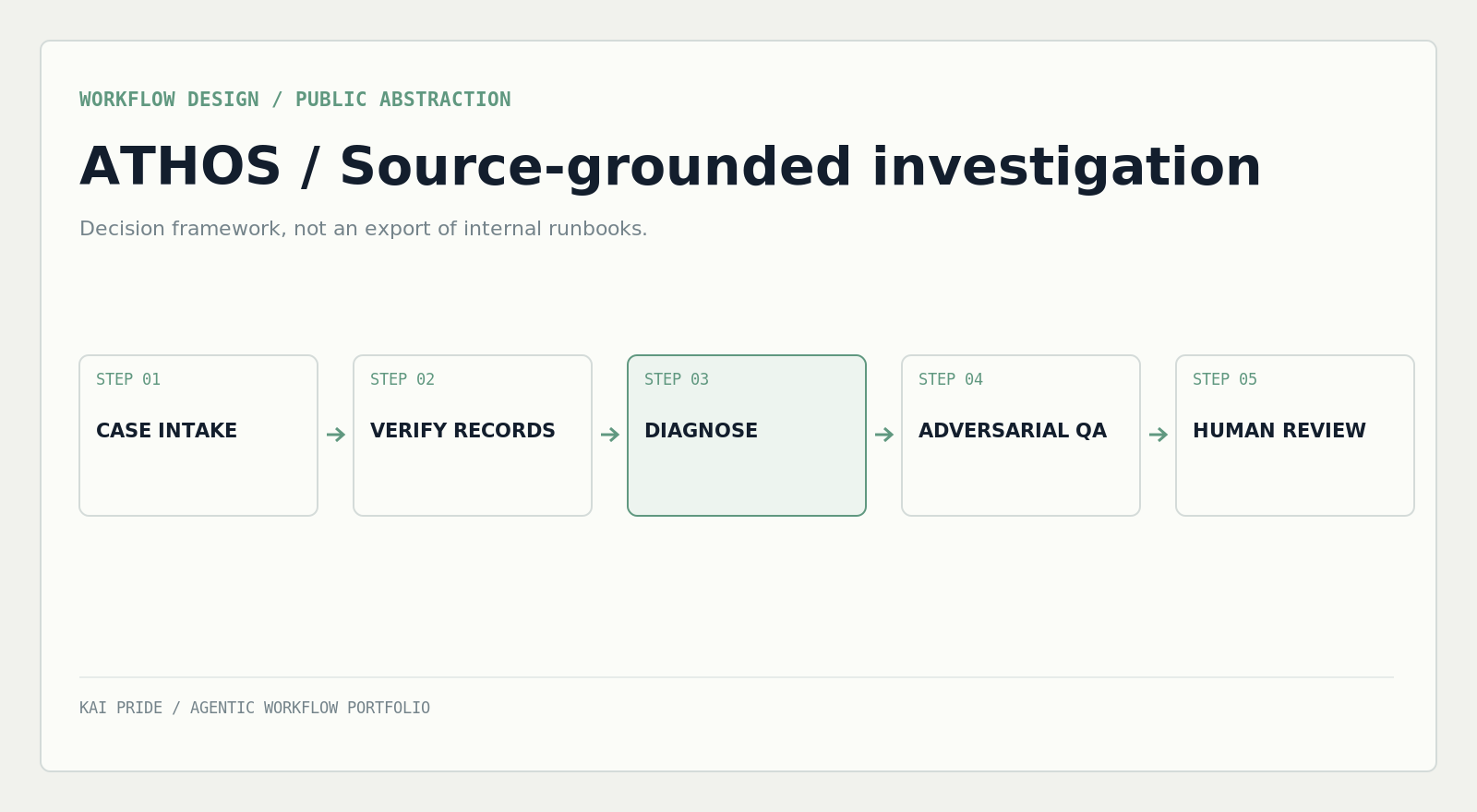
Diagram for ATHOS — The InvestigatorAGENTIC AI

ATHOS — The Investigator

Evidence-led AR investigation, financial lineage, source provenance and controlled human handoff.

Explore engineering approach ↗
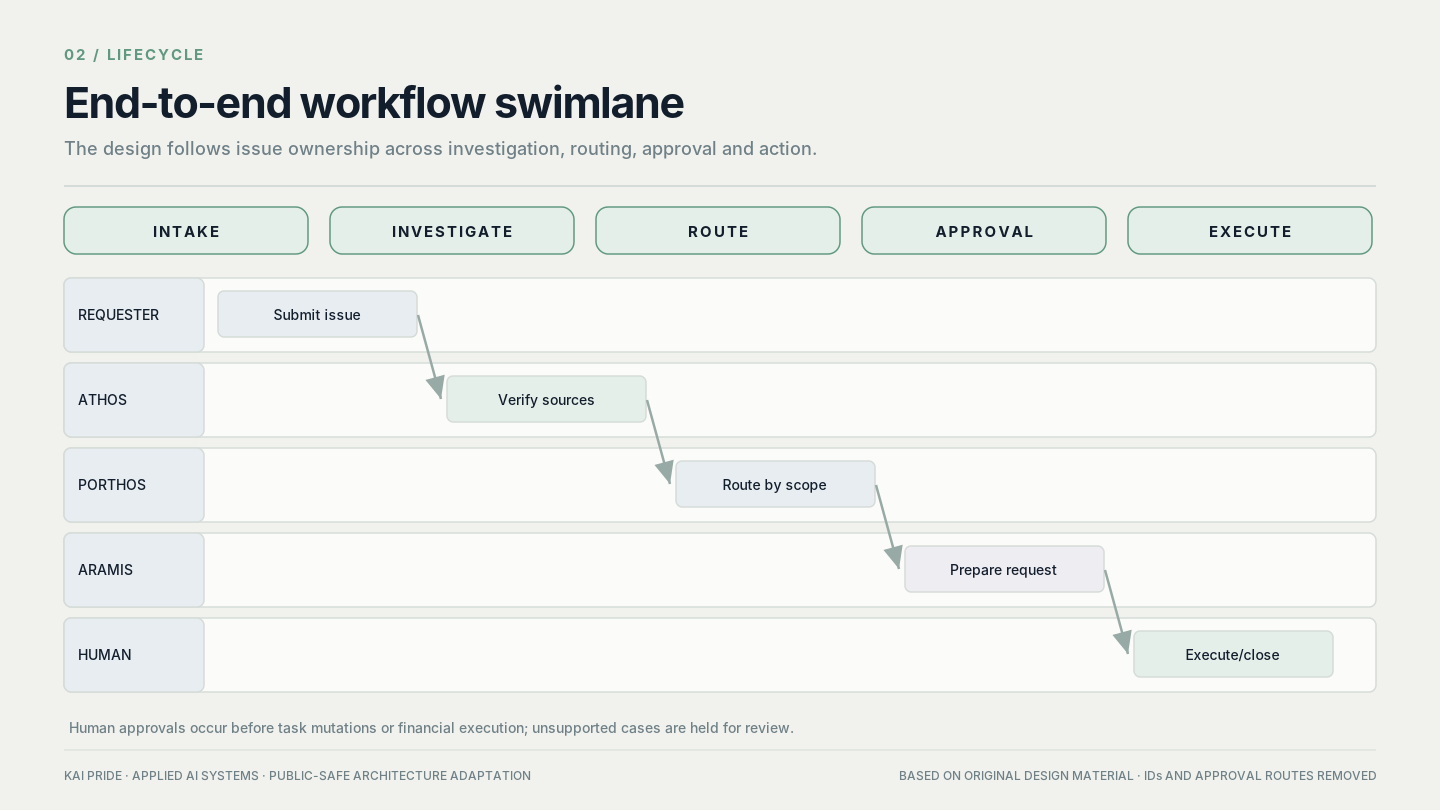
Diagram for AR TRIAGE L2AGENTIC AI

AR TRIAGE L2

Layered triage and classification; October activity recorded 153 cases and 219 agent sessions.

Explore layered AR triage ↗
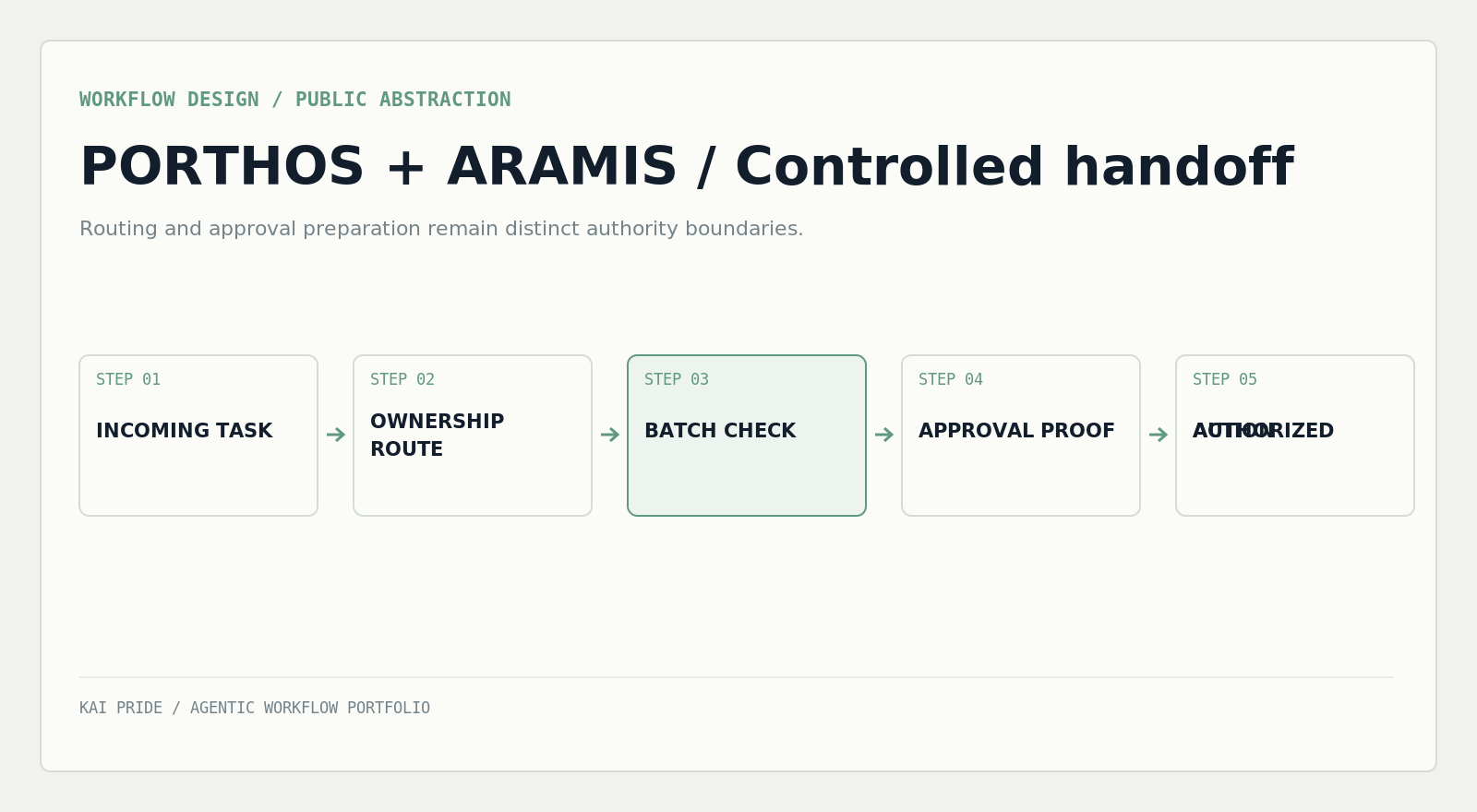
Diagram for Bank-file billing assuranceAUDIT & CONTROLS

Bank-file billing assurance

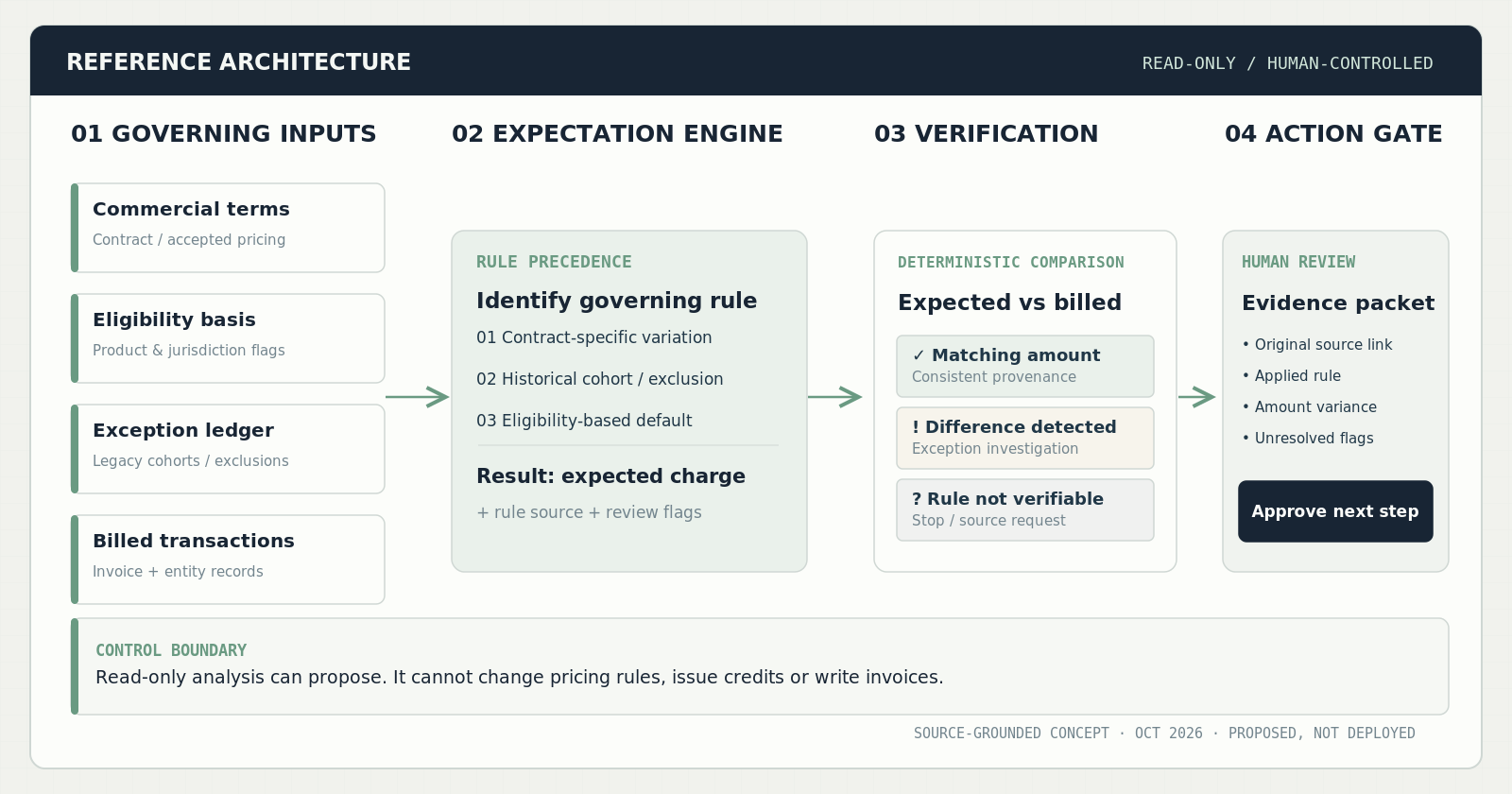
Commercial pricing-rule analysis and proposed AI-assisted exception review.

Explore billing assurance ↗
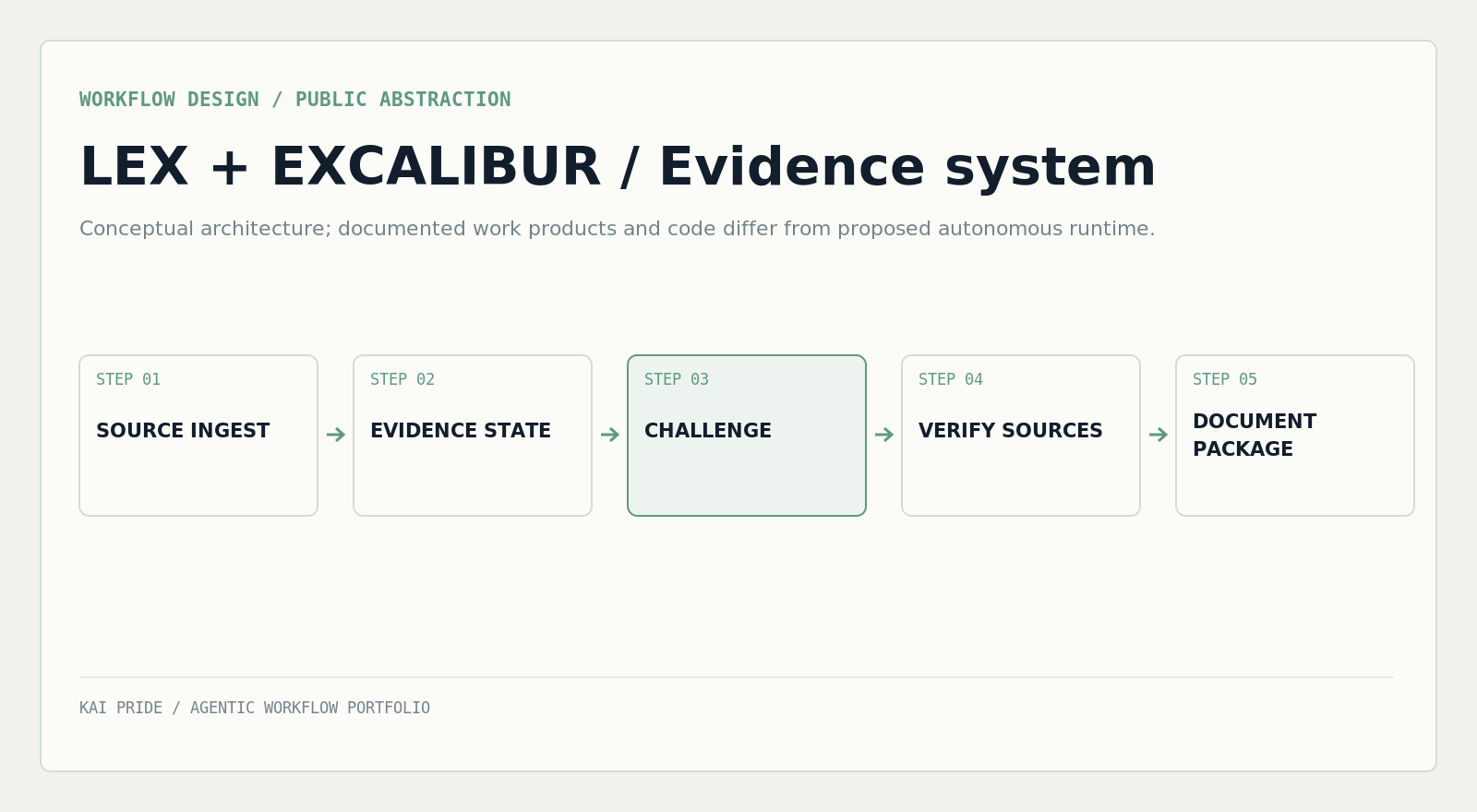
Diagram for Emergency billing recoveryFINANCE AUTOMATION

Emergency billing recovery

78 invoices representing approximately US$1.4m in invoice value addressed through an adapted billing workflow.

Explore emergency billing delivery ↗
FEATURED EXPERIENCE / APPLIED AI & FINANCE CONTROLS

Deel — engineering connected financial workflows.

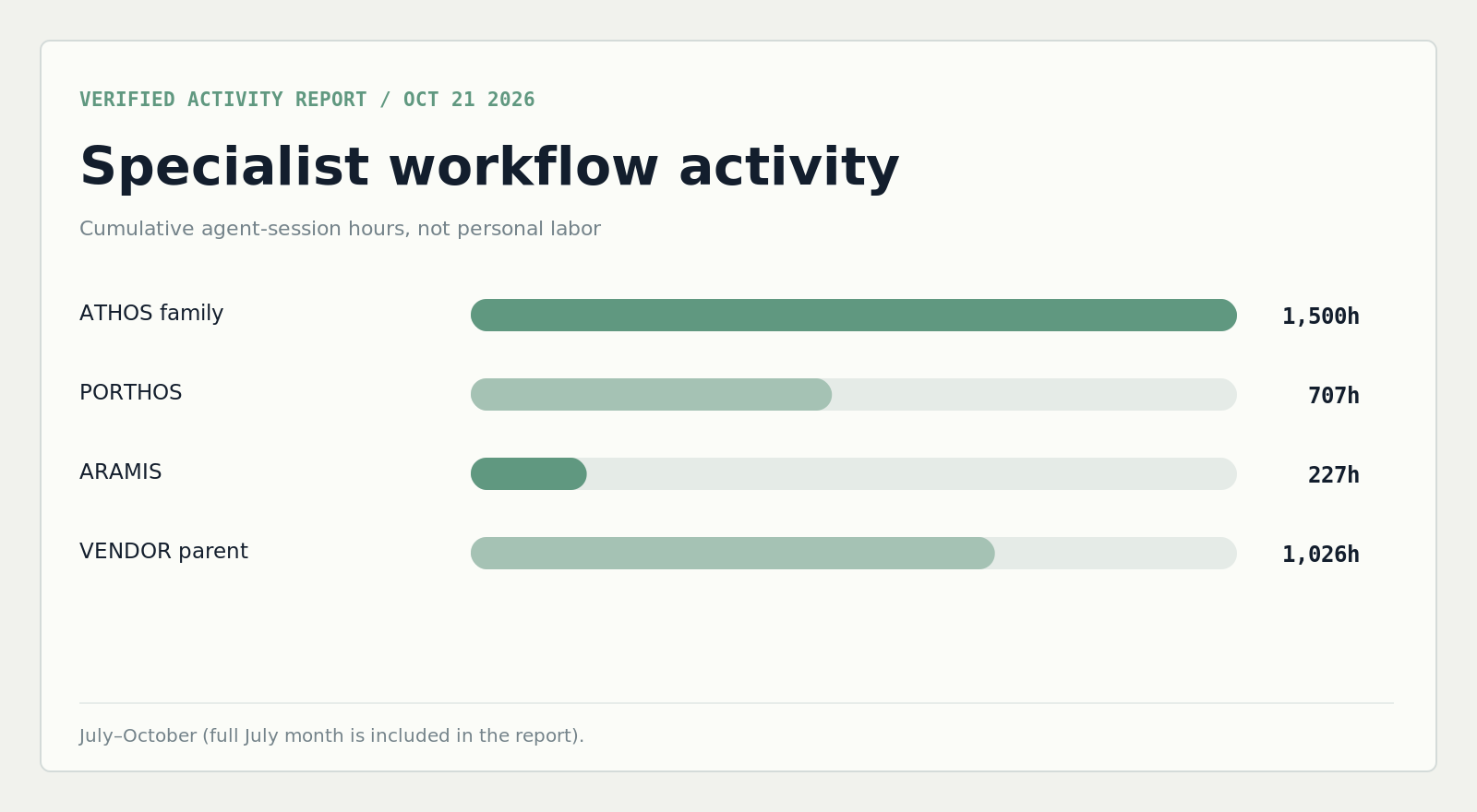
During my time at Deel, I developed applied AI workflows for receivables investigation, operational routing and approval preparation. These original diagrams show how I approached the work: clear responsibilities, evidence-backed decisions, explicit exceptions and human authority over financial execution.

Read professional experience ↗
01 / INVESTIGATE

ATHOS

Reconstruct the issue, consult source records and policies, classify the case and prepare a supported diagnosis.

02 / ROUTE

PORTHOS

Resolve ownership, apply the routing hierarchy and preserve case context across specialist handoffs.

03 / VERIFY & PREPARE

ARAMIS

Recheck financial details, prevent duplicate requests and coordinate approval preparation and tracking.

ORIGINAL PROJECT DIAGRAMS / 7 VIEWS

Explore the workflow from every angle.

Select a view, then enlarge it to inspect the detail.

Connected-agent architecture

The human interaction layer, specialist workflows, operational evidence and shared case state form a connected system. Investigation, routing and approval preparation have distinct responsibilities.
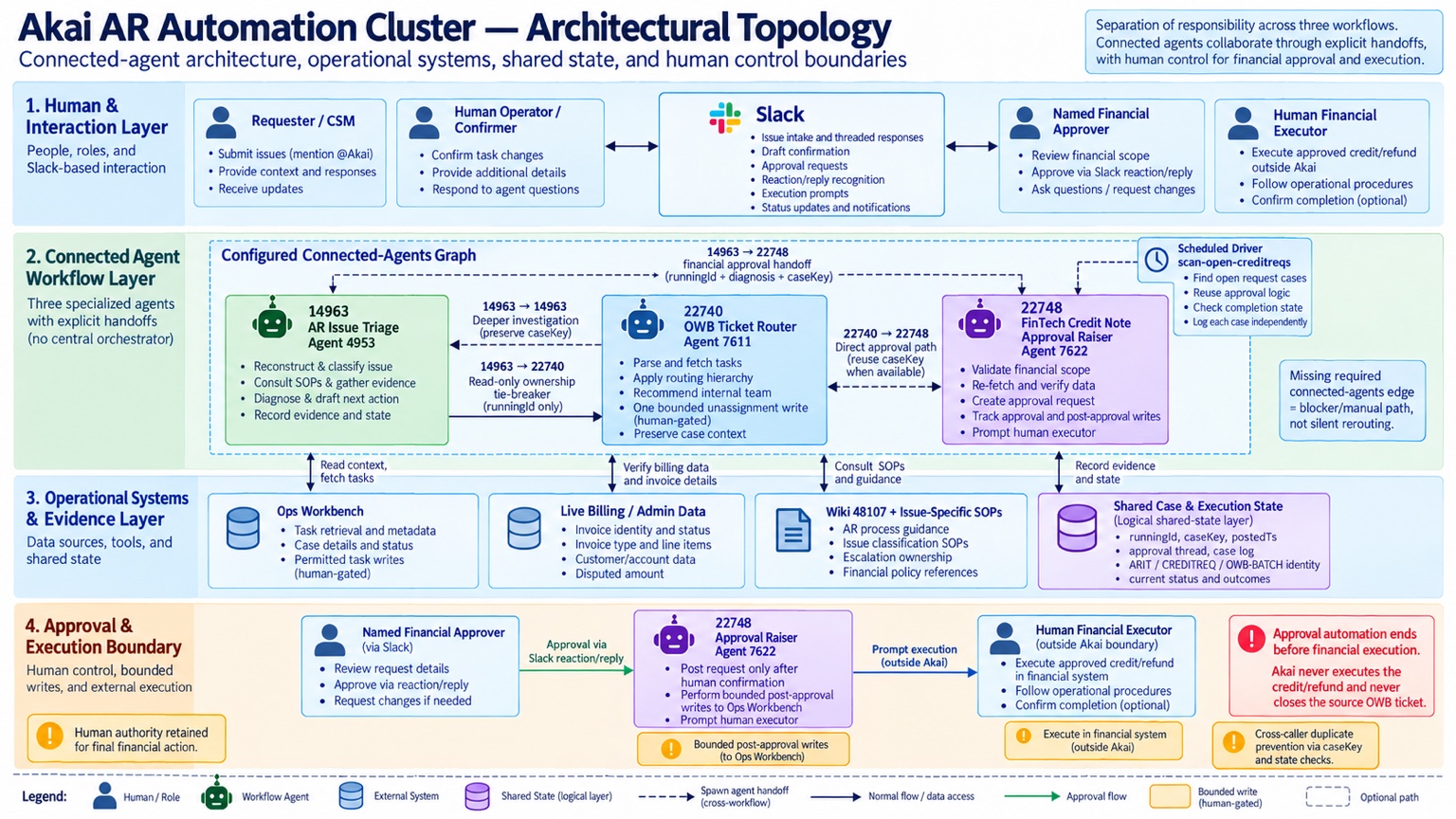
AKAI AR automation cluster: connected-agent architectural topology
01 / 07Original diagram · Select to open at full size
CONTROL ENGINEERING

Verify before advancing

Independent source checks, duplicate prevention, case identity and explicit hold states keep incomplete or conflicting evidence visible.

HUMAN AUTHORITY

Approval and execution are distinct

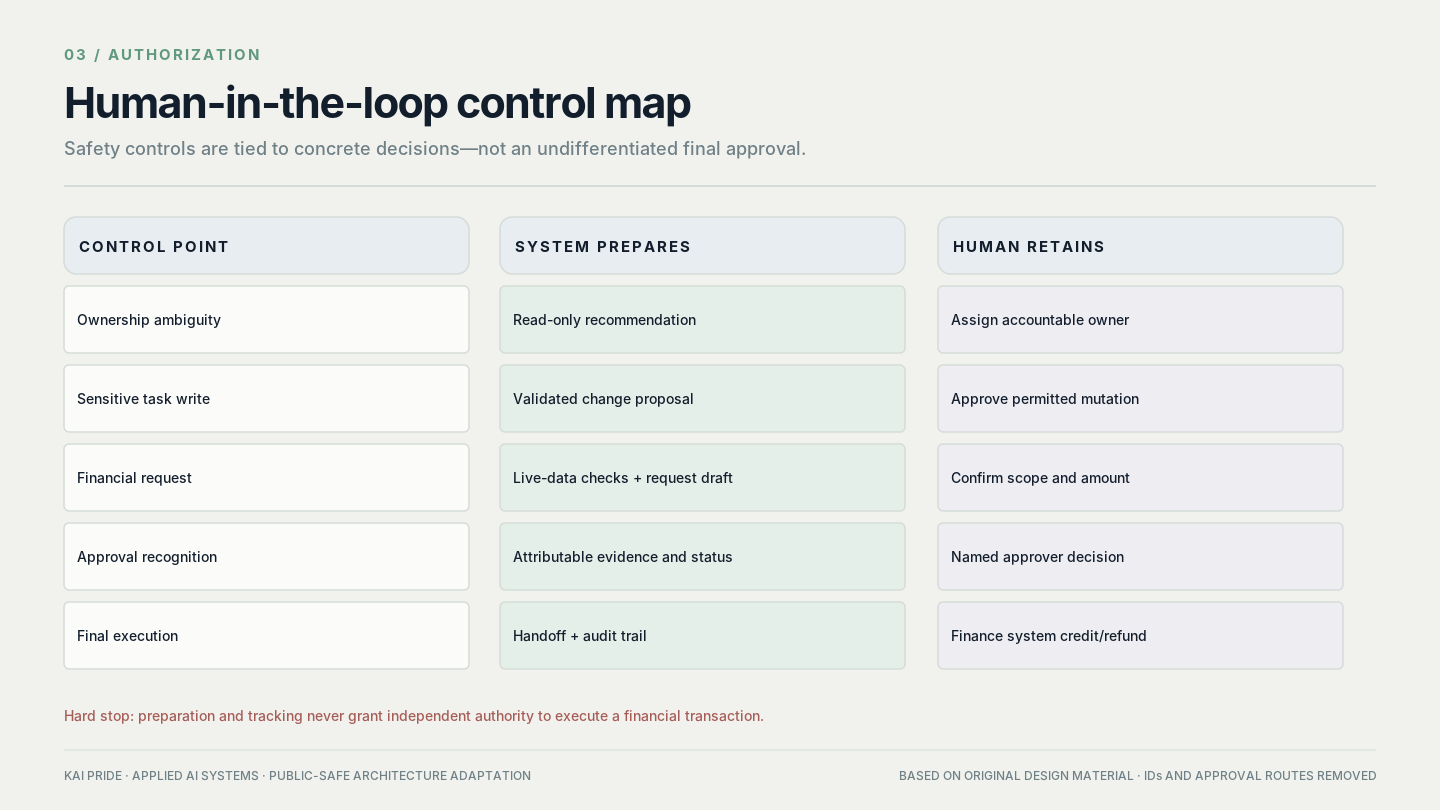
The workflows investigate, route and prepare approval work. Human confirmation, financial approval and final execution remain distinct checkpoints.

OPERATIONAL RESILIENCE

Make failure recoverable

Missing inputs, ambiguous ownership, rejected requests and pending decisions have their own recovery or escalation paths.

DOCUMENT AUTOMATION

Turn documents into controlled intake

The Nota Fiscal flow combines PDF extraction, batch preparation, user review, jurisdiction-specific routing and verification after ticket creation.

Connected-agent architecture

Open original ↗
Connected-agent architecture

FEATURED CASE STUDY / COMMERCIAL RULES & AI ASSURANCE

Billing assurance — test the rule before scaling the workflow.

In a cross-functional review of a bank-file billing process, I brought an operational perspective to the way commercial rules, source data and automation interacted. My contribution focused on retrospective testing, exception analysis and a proposed independent assurance layer.

My contributionOperational diagnosis · Adversarial validation · Source-of-truth analysis · Architecture recommendations
01 / CASE-LED VALIDATION

Work backwards from exceptions

I proposed grouping historical cases by jurisdiction and outcome, then comparing accepted cases, false positives and rejected cases to test the rules before extending automation.

02 / COMMERCIAL RULES

Separate eligibility from the proxy

I challenged the relationship between operational fields and the commercial rule they were being used to represent. The review distinguished product eligibility, pricing rules and historical exceptions rather than treating one convenient field as sufficient.

03 / EXCEPTION GOVERNANCE

Challenge exclusions as well as charges

I recommended testing the reason for an exclusion and tracing it to supporting evidence. An exception list needs a justified rule and a reviewable source, rather than acceptance by default.

04 / SOURCE CONSISTENCY

Check that rules stay in sync

I questioned how eligibility guidance, warehouse tables, operational trackers and implementation logic were updated together. A copied rule can become stale even when each individual tool appears to work.

PROPOSED VALIDATION APPROACH

Review before release. Reconcile after generation.

I proposed AI-assisted review to surface exceptions for investigation, paired with source-backed checks and a controlled handoff to the team authorized to make changes.

  1. Establish the ruleConfirm product eligibility, effective terms and supported exceptions at the correct entity level.
  2. Preview the candidatesCompare expected charges with draft or issued transactions and group items requiring investigation.
  3. Reconcile the lifecycleCheck cancellation and credit history before treating an invoice record as the final financial state.
  4. Explain coverage gapsTrace which eligible records were selected, excluded or left outside the automation.
  5. Prepare a reviewed handoffProvide evidence and a curated change list to the accountable implementation owner.
Why a read-only investigator matters

The review included a read-only investigator being developed by a data colleague. I proposed ways to strengthen validation, source coverage and the operational handoff. Investigation can explain a discrepancy and prepare a change list while implementation permissions remain with the authorized owner.

How I applied experience from an earlier billing engine

I discussed transferring architectural patterns from my monthly billing engine: source retrieval, explicit rule checks, anomaly grouping, deterministic calculations and reviewer confirmation. The transferable contribution was the control architecture and method.

EARLIER EXPERIENCE / GLOBAL INFRASTRUCTURE

Where engineering and finance met.

My time at Meta supporting EMEA Network Investments taught me how much reliable infrastructure depends on less-visible work: clear forecasts, accurate supplier records, purchase-order discipline and the ability to resolve financial exceptions across teams and borders. That experience informs the way I now approach automation: understand the operating reality before designing the system.

Explore the Meta experience ↗

SELECTED PROFESSIONAL EXPERIENCE / META · 2021–2023

Finance behind global connectivity.

At Meta (Facebook), I supported Production Engineering's EMEA Network Investments finance operations. My role connected financial planning and reporting with engineering delivery, procurement, suppliers and the operational detail needed to keep complex infrastructure work moving.

01 / INVESTMENT VISIBILITY

Reporting & forecasting

Supported network-investment reporting (NIMS), forecast trackers, billing forecasts and supplier statement reviews across the EMEA portfolio.

02 / CROSS-FUNCTIONAL DELIVERY

Engineering meets finance

Worked across Finance, Engineering, Procurement and supplier relationships on purchase orders, onboarding, invoices and payment exceptions.

03 / INFRASTRUCTURE CONTEXT

2Africa network ecosystem

Contributed finance-operations support within the multi-country network ecosystem that included the 2Africa subsea cable initiative.

04 / PROCESS RELIABILITY

Investigate, document, validate

Investigated recurring finance-system defects, translated operational problems into documented requirements and supported remediation validation.

FEATURED CASE STUDY / FINANCE AUTOMATION

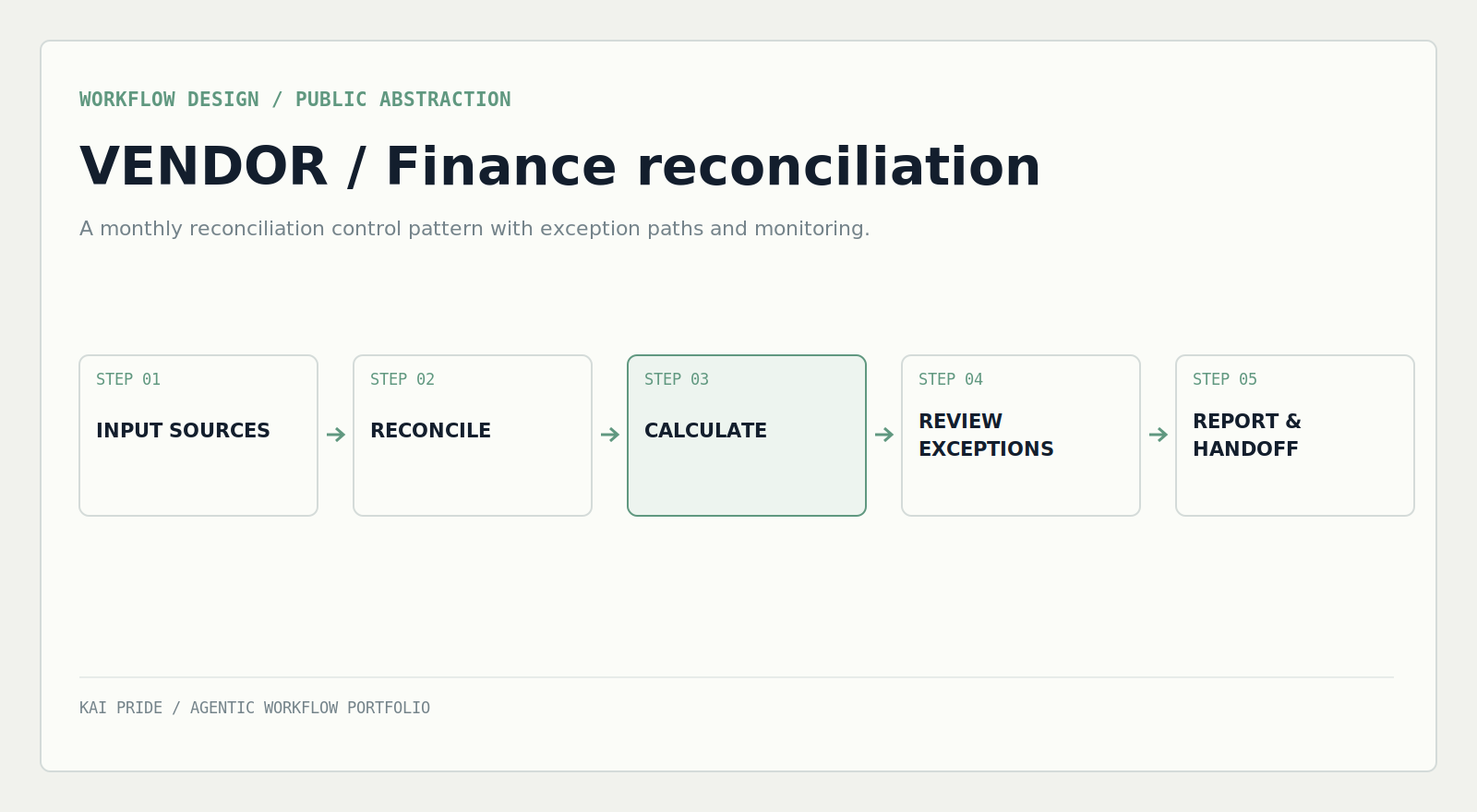
VENDOR — end-to-end monthly billing engine.

I engineered an agentic workflow to coordinate recurring billing, reconciliation, exception handling and controlled financial handoff. It combined deterministic calculations with AI orchestration and an explicit human approval boundary.
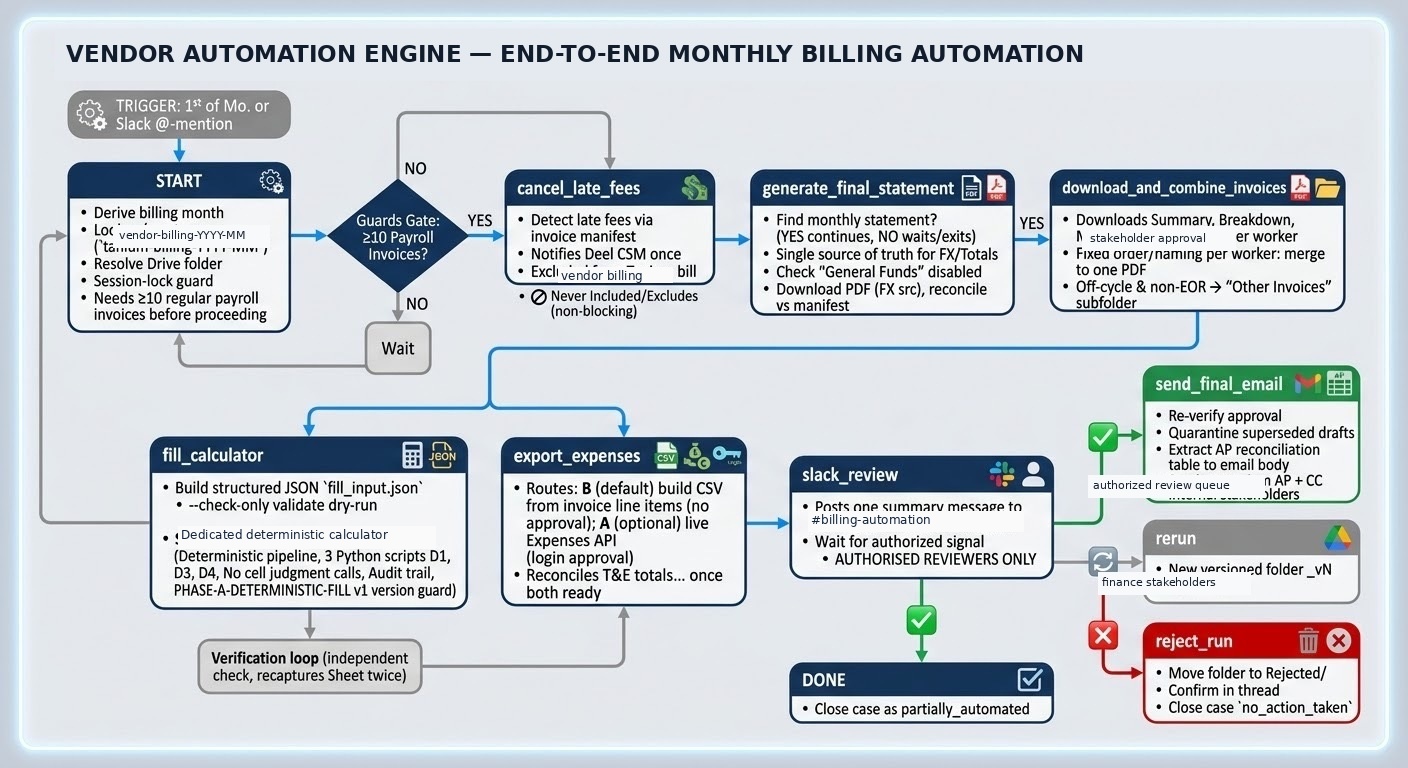
Eight-stage public-safe architecture for the VENDOR monthly billing engine, from intake through authorized delivery

Original workflow architecture, with customer names and internal references anonymized for public presentation.

01 / CONTROLLED INTAKE

Readiness before execution

Monthly trigger, case and folder resolution, minimum payroll-invoice guard, and late-fee exception detection before downstream processing.

02 / FINANCIAL ACCURACY

Source-backed reconciliation

Monthly statement lookup, FX and total reconciliation, consolidated worker invoice packages, and dedicated deterministic calculator logic using structured data.

03 / AUDITABLE EXECUTION

Independent verification

Versioned execution, audit trail, calculator verification loop and expense reconciliation. Missing inputs, failed checks and superseded drafts are handled as explicit states.

04 / HUMAN AUTHORITY

Approval before delivery

Reviewer-facing summary and authorization gate, revalidation before final dispatch, plus distinct retry and rejection routes to preserve accountable decisions.

Discuss your next project.

Define the problem, assess the opportunities and plan a practical route to an applied AI or automation solution.